Water-safety tips for swimming in pools and open water


Essential water safety tips
Learn essential water safety tips to ensure a fun and safe summer for the whole family.
- Formal swimming lessons significantly reduce the risk of drowning for young children.
- More than 40 million adults don’t know how to swim; more than half have never taken a lesson.
- Nonfatal drowning can also lead to serious long-term health problems.
With summer’s arrival, many folks will be cooling off at pools, lakes and ocean beaches. Awareness of the dangers these waters pose and taking precautions can prevent those excursions from ending in tragedy.
Each year, about 4,000 people die in the U.S. from unintentional drowning, according to the Centers for Disease Control. That’s an average of 11 drowning deaths per day.
Drowning is the leading cause of death for children 1 to 4 years old. For children 5-14, it is the No. 2 cause, behind motor-vehicle accidents.
Statistics from the American Red Cross show that most children ages 1 to 4 drown in home swimming pools and hot tubs, while the majority of drowning deaths for those 5 to 17 happen in natural bodies of water.
Pools and open water aren’t the only places where safety and supervision matter, as bathtubs are the second leading location where young children drown.
To reduce the risk of drowning, swimming is a skill that both children and adults should have.
The National Drowning Prevention Alliance states that the drowning risk for children ages 1 to 4 decreases by 88% when they have formal swimming lessons.
Though swimming lessons lower the risk of drowning, more than half of adults in the United States have never taken a lesson and more than 40 million don’t know how to swim, the CDC reports.
Additionally, a 2020 study by the Red Cross found that more than half (54%) of youngsters ages 4 to 17 were unable to perform basic water-safety skills that could save their lives.
These basic skills, also known as “water competency,” include:
- Stepping or jumping into the water over your head
- Returning to the surface and floating or treading water for one minute
- Turning around in a full circle and finding an exit
- Swimming 25 yards to the exit
- Exiting from the water; if in a pool, you should be able to exit without using the ladder.
Safety is critical to the fun of swimming, so here are a few tips for being careful in and around water:
- Ensure the whole family can swim well. Enroll nonswimmers in water orientation and swim classes offered at the Red Cross, YMCA and some neighborhood community centers.
- Sharpen those skills. The Red Cross also offers home pool safety, water safety, first aid and CPR/AED courses on how to prevent and respond to water emergencies.
- Read and heed. Swim only in designated, clearly marked areas and at pools supervised by lifeguards.
- Adopt the buddy system. Always swim with another person and don’t let anyone else swim alone.
- Keep a close eye on kids. Never leave a child unsupervised by an adult near water. Drowning can happen in seconds, often silently, so avoid distractions including cell phones.
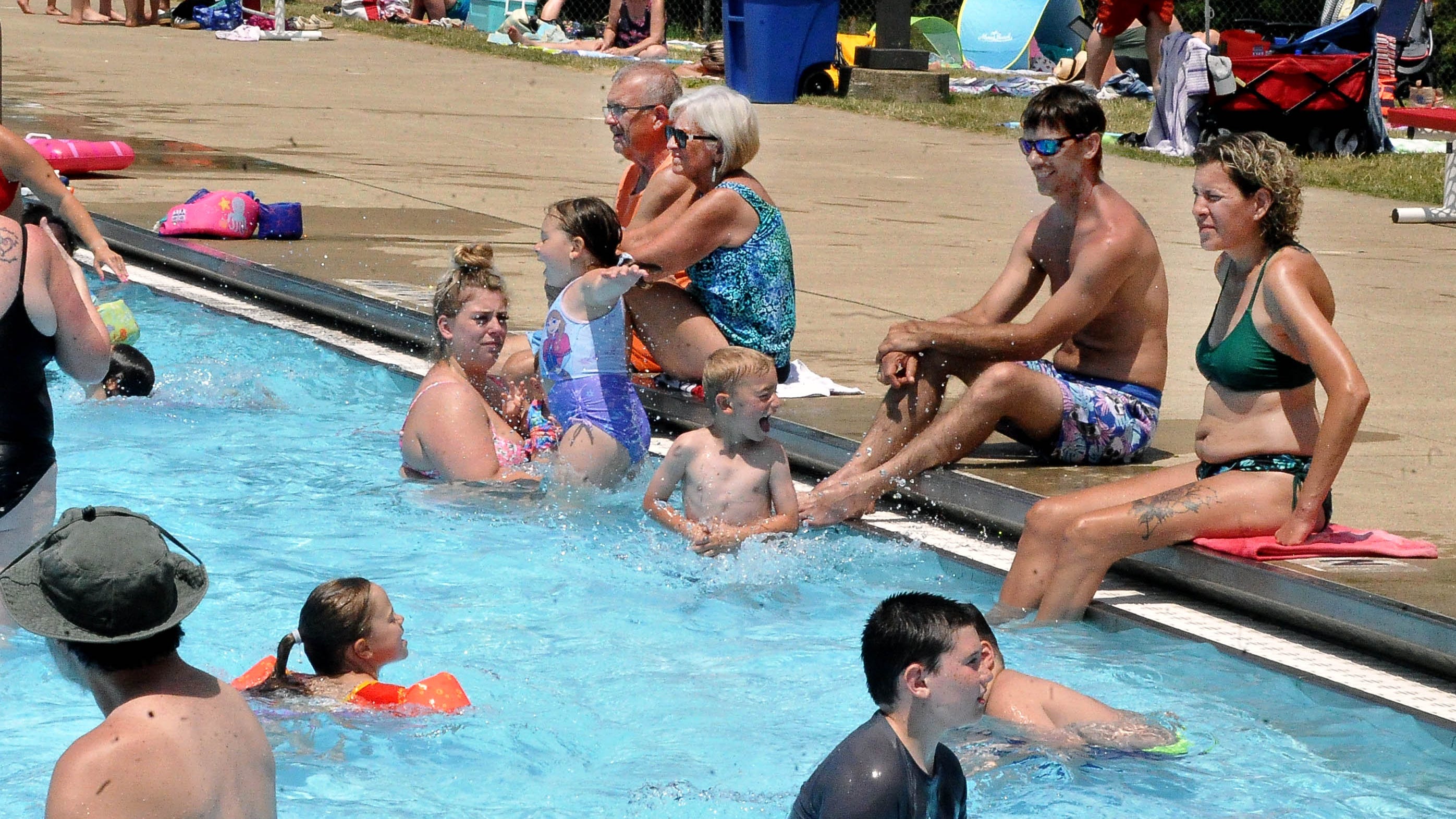
- Don’t rely on floaties. Inflatable floaties, arm bands or water wings can easily slip off. A U.S. Coast Guard-approved, well-fitting life jacket offers more protection for both kids and adults.
- Fence in home swimming pools. Enclose pools by a fence at least 4 feet tall that separates it from the house. The fence should have a self-closing and self-latching gate. Also, remove any toys that might attract a child when the pool is not in use.
Last, but not least, be aware of nonfatal drowning, which occurs twice as often as fatal drownings. These incidents, in which the person survives, can have a range of outcomes from no injuries to brain damage and long-term health issues.
Entertainment and Things to Do reporter Belinda M. Paschal can be reached at [email protected].
link