5 Steps to Start Learning How to Swim by Yourself

How to Swim, Step by Step
It is never too late to learn how to swim. If you’re learning to swim solo, it’s best to start with the front crawl, or freestyle, stroke. It is the most efficient stroke and provides a good foundation of skills that can later be applied to other strokes if you choose to learn them.
1. Start in the Shallow End
“When first learning how to swim, it’s important to develop some level of comfort in the water,” Oliphant says. “Start in the shallow end of a pool where you can easily stand. This is an ideal way to get used to the water without being unsafe.”
From there, Oliphant suggests practicing exhaling underwater. To do so, she recommends that you stand comfortably in the shallow end, taking an inhale. Then, gently sink down, or just put your face in the water, exhaling by blowing bubbles. Once you’ve exhaled, remove your face from the water.
After you’re comfortable exhaling underwater, you can build on this skill by beginning to incorporate side breathing.
To do this, take a deep inhale above water, place your face into the water so that the front of your face is covered but your ears remain above water level. Exhale and turn your head to the side to inhale again. Once you’ve inhaled, turn your head back toward the bottom of the pool, submerging your face again. Then exhale and repeat until you get a feel for side breathing.
2. Float in the Water
All swimming is based on the concept of floating. If you don’t know how to do this critical swim skill, you may struggle to swim through the water safely and efficiently.
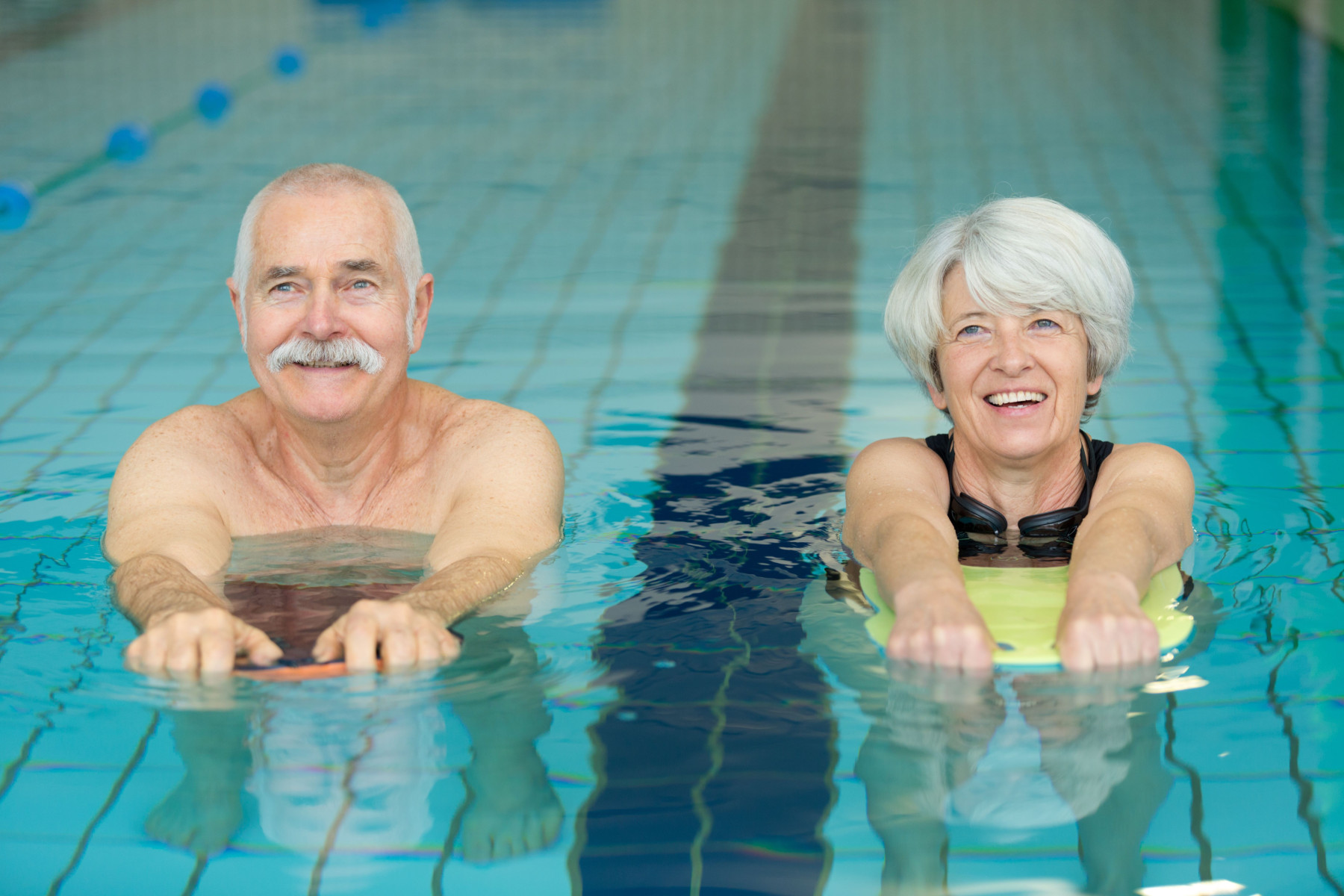
“After you feel confident about your ability to exchange air above and below water, you should move on to learning how to front float,” Oliphant says. “The front float is also best learned in the shallow end, and you can even use a pool noodle to help you get started.”
To practice front floating, begin by standing a few feet away from a pool wall in the shallow end of the pool. Holding on to the side of the pool, reach your body backward with your hands forward on the side of the pool so that you can lift your hips and legs toward the surface and lie on your stomach, keeping your body in a straight line.
Release excess tension in your muscles and use side breathing to sustain your flotation. You can put a pool noodle under your pelvic area, ankles, or both to help you understand how to master this basic swim move.
If you don’t feel comfortable front floating, you can also start with a back float, which is even safer. Hold the edge of the pool and gently allow your body to float up to a horizontal position. Then, gradually transition to floating on your front as you grow more confident.
If you’re having trouble incorporating side breathing as you learn to float, you can forward breathe, too. This can also help you grow more comfortable with the kicking motion needed to keep your lower body floating.
3. Start Kicking
When many people think about swimming, they think of it as an exercise for their upper body. This is true, but your legs play an important part in propelling you forward and keeping you afloat.
To practice swim kicking, start in the front floating position described above, holding the edge of the pool. Keeping your knees soft, kick your legs up and down, alternating your feet and generating power from your glutes and hips.
Keep your legs and feet just below the surface and kick with a quick, comfortable cadence. You don’t want to kick too wide like you’re walking. Instead, keep the motion small and fast.
Exhale underwater, turn your head and draw a new breath. Continue your kicks and breathing until you are comfortable breathing while kicking.
4. Add Arm Movements
The next key step when learning to swim by yourself is to incorporate the arm movements used in the front crawl stroke.
Stand in the shallow end. Hold your arms out in front of you, palms down with your fingers together. Take a deep breath and bend at your waist, placing your face in the water.
From this starting position with your arms outstretched at the surface, pull one arm down straight in front of you, sweeping your hand past your hip. Your palm should act as a paddle, pushing the water.
While your hand moves through the water, turn your head in the same direction and take a breath. As your arm moves past your leg after pulling, lift your hand and arm out of the water, leading with your elbow. Reach forward and bring your arm back to the starting position.
Repeat this pattern with both arms, breathing on either side until you find which side your breathing feels more comfortable.
Eventually, you will want to try this motion while floating with the front side of your body, face in the water.
5. Keep Practicing
Once you feel comfortable practicing all of these components, you can try putting them together. Face away from the pool wall, extend your arms in front of you, crouch down and kick back against the wall to propel yourself forward into the pool.
Immediately begin kicking and performing your arm strokes. In rhythm with the stroke, begin side breathing. Both of your arms should be outstretched, legs kicking consistently. As one of your arms pulls and returns to over the water, your other arm follows suit.
Continue this series of motions until you’re able to swim the width of the pool without having to stop. Avoid areas of the pool that are very deep until you are confident in your swimming abilities.
This video from the University of Georgia provides some useful instruction about breathing and arm movements for this stroke.
link