A historic Calif. hot springs hotel returns to shake off commune past
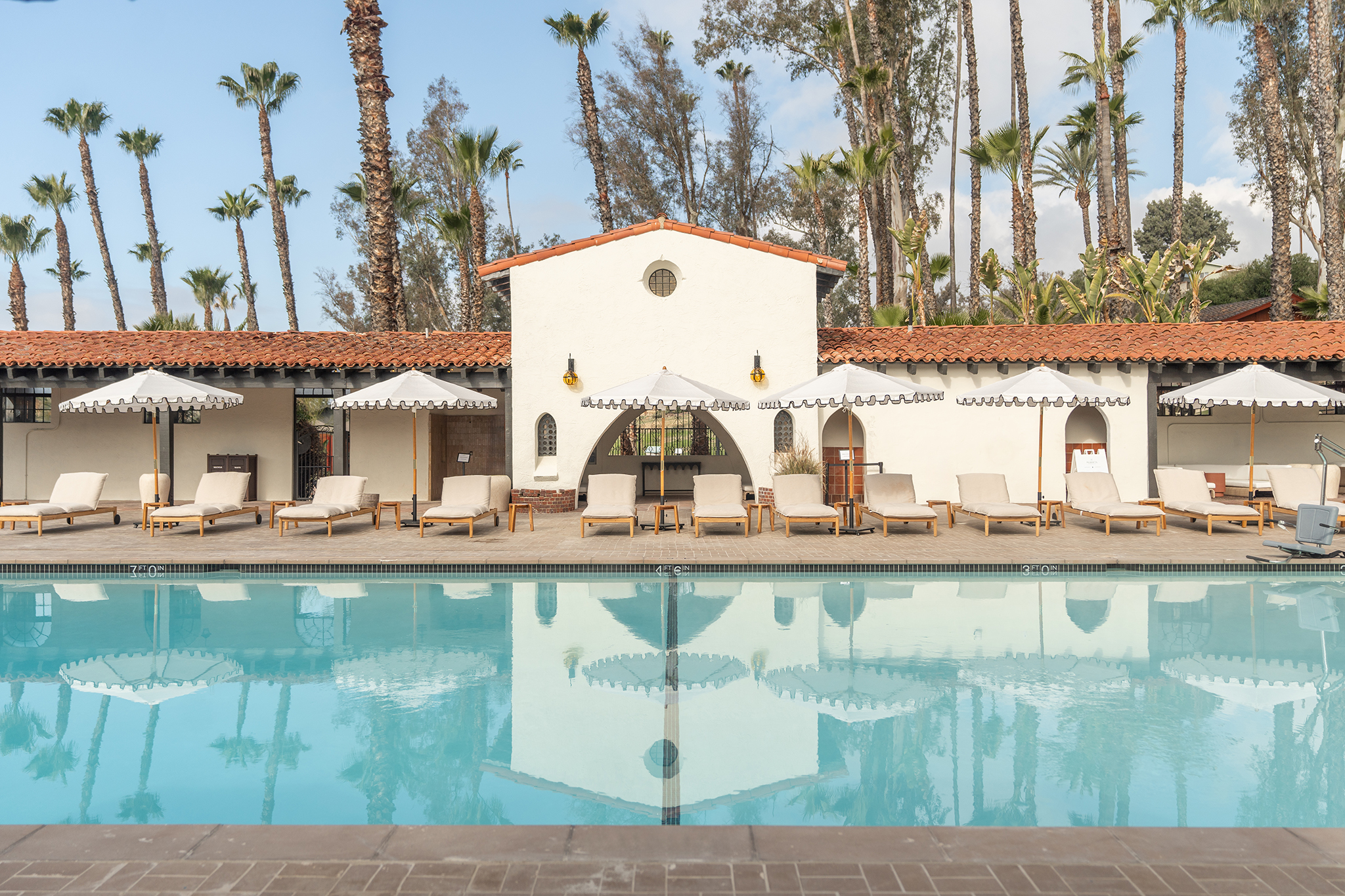
A quick stop off Highway 79 transports visitors to a distinctly California haven — crisp white buildings, terra cotta roofs, shady palm trees and geothermal pools that are filled with healing minerals.

Murrieta Hot Springs is halfway between Los Angeles and San Diego — a pitstop off Highway 15 and into lush greenery amid an unassuming commercial area. The property has lived several lives over 100 years — ranging from a predominantly Jewish-frequented hotel to a vegetarian commune and then a Christian Bible college.
In February, it returned to its roots as a place for the public to gather, feeding their curiosities in holistic healing and offering luxuries with old-world charm and poolside service.
Article continues below this ad

Oasis Pool at Murrieta Hot Springs Resort.
Bri Amato/Courtesy of Murrieta Hot SpringsAfter a century of openings and closures, how have the ancient hot springs adapted to the present?
History of healing
Evidence of the hot springs’ health benefits existed long before colonizers moved into what would later become California.
Article continues below this ad
The Luiseño people called the springs “Cherukanukna Hakiwuna” and used the water for healing centuries before the Spanish arrived, mixing the water with dirt to take mud baths. After the Spanish arrived, the water was used to heal body sores.

Murrieta Hot Springs pool exercise, 1987.
Los Angeles Public Library/Calisphere
Aqua yoga at Murrieta Hot Springs Resort.
Bri Amato/Courtesy of Murrieta Hot SpringsTestimonies of the springs’ power rolled in as the Temecula Land & Water Company took over the site in 1884 and added a hotel, bathhouse and steam laundry service. A Los Angeles doctor promoted visits to the springs to enjoy its “ameliorative attributes.” A bolder claim came from a San Diego real estate developer who said his hearing was restored after treatment in the water.
Article continues below this ad
After German immigrant Fritz Guenther from Los Angeles bought the property in 1902, the resort exploded in popularity. Visitors drank with ladles in hopes of being healed, as claims that the springs held the “marvelous cures of rheumatism and other chronic diseases” were dubious.
From 1982 to 1987, a holistic group called Alive Polarity made camp at the springs and transformed the land into a no-smoking, no-drinking vegetarian commune. The group bought the land after a bankruptcy following the Guenther family’s sale of the property in 1970. Members gave up their previous lives to live in abandoned hotel rooms and dedicated themselves to the commune.
After years of the property falling into disrepair, the Calvary Chapel of Costa Mesa bought it in 1995 and converted it into a Christian conference retreat center and Bible college. The facility closed during COVID-19, which led the church to sell.

Oasis Pool at Murrieta Hot Springs Resort, 1987.
Los Angeles Public Library/Calisphere
Oasis Pool at Murrieta Hot Springs Resort.
Bri Amato/Courtesy of Murrieta Hot SpringsIn August 2022, Olympus Real Estate Group purchased the property for $50 million and announced plans for a massive renovation to return the springs to a health and wellness resort.
Article continues below this ad
When checking in today, staff share pamphlets containing a map of the property with details about the minerals found in the 140-degree water. The resort cools the water as it travels through the pools to at least 104 degrees, making them safe for soaking. Dr. Marcus Coplin, the resort’s medical director who has a hydrothermal consultancy based in San Francisco, said in the brochure that the water has a “direct antioxidant effect and an enhanced anti-inflammatory effect” that works to relieve pain.
The water is an elixir of natural minerals, containing calcium, magnesium, sodium, potassium, bicarbonates, chloride, fluoride and boron, which soften the skin while relaxing the muscles to temper inflammation.
A Jewish haven
Although a hotel already existed when Los Angeles saloon owner Guenther bought the property at the turn of the 20th century, the resort’s reopening was extremely popular with a cohort of Californians who were often barred from enjoying them.
Article continues below this ad
At the time, other resorts in California were developing antisemitic policies, most notably in Palm Springs. By coincidence, several of the resort buildings at Murrieta Hot Springs were adorned in six-pointed stars, resembling the Star of David. Guenther said it was simply a design choice to decorate the buildings with carpenter’s stars, as Guenther was not Jewish.

Roman Pool at Murrieta Hot Springs Resort.
Bri Amato/Courtesy of Murrieta Hot SpringsGuenther and his family built the Monterey Hotel, followed by the California Hotel, both of which are still on the property. By the late 1920s, a new bathhouse was built, and the property eventually expanded to include a line of Victorian-style bungalows called Cottage Row.
The European-style baths appealed to immigrants, and as antisemitism was apparent in the lead-up to World War II, Jewish folks in Southern California felt welcome at Murrieta.
Article continues below this ad
Visiting today
Day passes to visit the resort today start at $49 for adults, with access to 27 pools (most geothermal, a few chlorinated), as well other amenities like the bathhouse.

Sound bath water therapy at Murrieta Hot Springs Resort.
Courtesy of Murrieta Hot SpringsUnlike other natural springs, the resort’s water has minimal amounts of sulfur, avoiding the rotten egg smell, Angela Kies, Murrieta’s director of wellness, explained to SFGATE.
Article continues below this ad
Each pool has a temperature gauge to prepare guests before sticking their toes into the water. The resort recommends contrast bathing to get the most benefits — switching from warm pools up to 100 degrees for 10 minutes to hot pools up to 104 degrees for up to 10 minutes and then a quick dip in a cold-plunge pool at 64 degrees for a minute before repeating the process all over again.
Inside the bathhouse are several pools and a Kneipp walk, where guests can alternate between walking through cold and hot water to increase blood flow and circulation. The cold temperature feels like wading through pins and needles, while the hot water provides some relief.

The dry sauna at Murrieta Hot Springs Resort.
Courtesy of Murrieta Hot SpringsOutside the bathhouse are several new pools with mineral water piped in. Staff members periodically stop by to measure the temperatures to ensure they align with posted signs. On a nearby hill, two-person bathtubs look over the featured lake.
Article continues below this ad
Although the resort opened in February, a remodel is ongoing. One of the historic rooms in the hotel remains gutted while a former Bible college bookstore awaits a transformation into a wine bar.
The unfinished projects serve as a reminder that while Murrieta Hot Springs continues to draw a crowd, the property is constantly going through a metamorphosis — adapting with time.
Article continues below this ad
link