The Rise of Swim In Place Pools

Swim-in-place systems are making a major splash in the pool industry as homeowners increasingly prioritize fitness, therapy, and dynamic play. Over the last two decades, swimming pools have evolved from tranquil backyard retreats into multifunctional spaces designed for movement and wellness. At the forefront of this evolution is Current Systems, the manufacturer of the Riverflow pump—a powerful, low-head, high-volume current system designed to bring water to life.
“Ten to twenty years ago, people looked at a swimming pool as a place of tranquility and a place for family to gather,” says Phil De Tournillon, co-founder of Current Systems. “Now there’s this interactive opportunity for them to get wet.” The shift from passive pool lounging to active aquatic experiences is fueling a surge in interest for swim-in-place systems, lazy rivers, and dynamic water environments that enhance both health and enjoyment.

The Rise of Swim In Place Pools
A growing number of homeowners are embracing fitness-focused design. Swim-in-place systems, like the Riverflow pump, provide continuous water resistance that transforms even compact pools into endless lap lanes. But according to De Tournillon, it goes beyond swimming. “You don’t need to be a swimmer to get the benefit of current,” he explains. “There’s a sense of movement that the body feels—a therapeutic push and pull that provides pleasure and health benefits.”

This sensation, he says, replicates the natural feeling of being in the ocean or a river. For homeowners, that means a more immersive experience, whether they use their pool for exercise, hydrotherapy, or simply floating in gently moving water.
Small Pools, Big Function
One of the biggest drivers behind this trend is space. Not every backyard has room for a 60-foot lap pool, but that doesn’t mean homeowners need to sacrifice functionality. “People are restricted on the size of their spaces,” says De Tournillon. “But they’re really looking to immerse themselves in the water, not just sit beside it.”
Thanks to powerful, adjustable systems like Riverflow, even modest plunge pools can now offer robust fitness and therapeutic capabilities. That flexibility is helping usher in a new category of “performance pools” tailored to compact, urban environments.
The Smart Pool Era
With the rise of pool automation and smart homes, the ability to control a swim current has become just another tap on the app. Riverflow integrates seamlessly with platforms from Pentair, Hayward, Jandy, and Poolside Tech’s “The Attendant.”
“These systems give the client a single source to control lights, jets, and the current system,” explains De Tournillon. Variable speed controls allow users to customize their experience based on the activity—slow for relaxation or light therapy, and faster for exercise or play.

“The Attendant by Poolside Tech has taken it even further,” he says. “They’ve developed a way to add variable speed control, giving the client even more versatility to fine-tune their experience. It’s quite exciting.”
Enter the Adventure Pool
Dynamic water environments aren’t just for workouts. They’re also driving the rise of the “adventure pool,” a trend where features like lazy rivers, slides, and waterfalls create a resort-style experience right at home. Riverflow plays a key role here too.
“We’ve done designs where jets actually propel swimmers coming out of a slide chute,” says De Tournillon. “It keeps the energy going after the initial splash.”
He notes that many homeowners return from vacations wanting to replicate that high-energy resort feel in their own backyard. Whether it’s a current loop that powers a lazy river or directional jets that enhance a waterslide experience, the goal is to make every moment in the pool more engaging.
Hybrid Pools: Where Tranquility Meets Motion
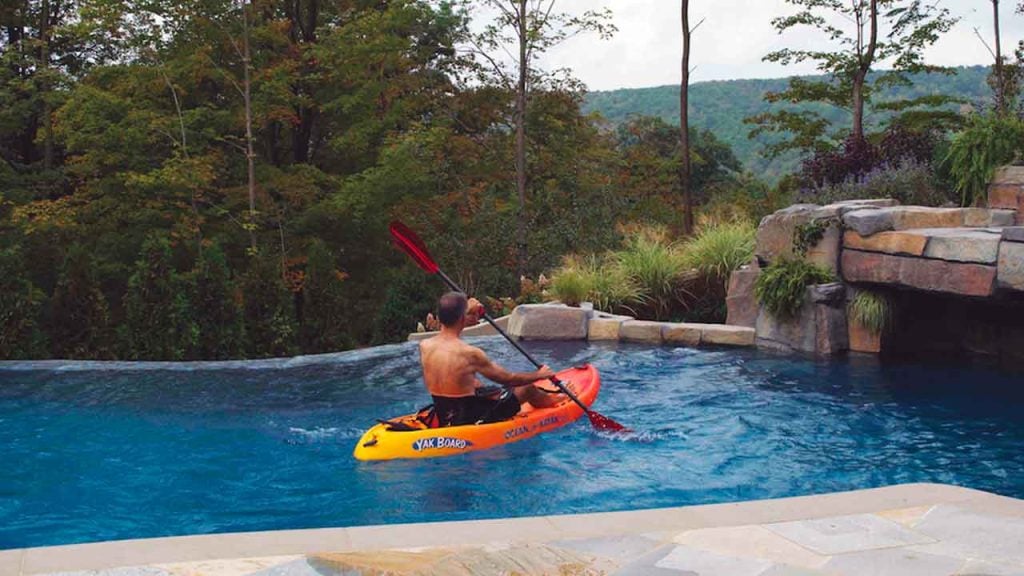
Despite the uptick in motion-centric pool designs, De Tournillon doesn’t believe the rise of active pools spells the end of traditional aesthetics. In fact, many clients want both. “You can have this beautiful mirror-glass surface and, at the flip of a switch, bring it alive with movement,” he says.
This hybrid model is becoming increasingly popular—one moment it’s an elegant infinity-edge pool perfect for entertaining, the next it’s transformed into an aquatic playground or a resistance training lane. The versatility allows for broader enjoyment across age groups and lifestyles.
Pools That Adapt to People
Customization and control are key. “If you’ve got five- and six-year-olds using the river, you’re going to want to slow it down,” says De Tournillon. “If teenagers show up, you can ramp it up.” The ability to fine-tune performance based on user preferences and safety is making these systems especially attractive for multigenerational households.
And when the current’s off? A lazy river can become a tranquil walking lane. It’s this kind of adaptability that underscores how far pool design has come.
Behind the Innovation
Current Systems is no newcomer to innovation. Founded by Peter Davidson, who invented the first countercurrent high-flow, low-head pump over 30 years ago, the company has continued to push boundaries ever since. De Tournillon joined forces with Davidson two decades ago and together, they’ve shaped the swim-in-place movement.
“We saw a huge need for moving water solutions in the pool industry,” says De Tournillon. “Not just for athletes, but for anyone who wants more from their pool.”
That inclusive mindset has helped fuel a broader interest in wellness, accessibility, and year-round aquatic enjoyment.
The Future Is Flowing
Looking ahead, De Tournillon sees the appetite for dynamic water features only growing. “In the next 10 years, I think it’s just going to be an amazing amount of water flowing,” he says. As more builders and designers understand the versatility that swim-in-place systems offer, more homeowners will opt for active features that enrich both health and enjoyment.
“You don’t have to choose between a beautiful pool and a functional one,” he adds. “You can have the best of both worlds.”
As more homeowners prioritize wellness, play, and smart design, the age of the dynamic pool has arrived—and with it, the rise of the current-driven backyard oasis.
Ready to take a deeper dive?
Listen to our entire conversation with Phil DeTournillon on the Pool Magazine Podcast.
Photo Credits: Current Systems
link